


Cabinet yesterday approved principles to the Zimbabwe Media Commission Amendment Bill and the Media Practitioners Bill that seek to instil professionalism in the media industry through provision of a robust regulatory framework, as the Second Republic moves to create a conducive environment for the sector.
The two Bills are part of the Government’s broader resolve to reform the media industry through providing an inclusive regulatory framework which, among other issues, provides a disciplinary mechanism for the journalism profession.
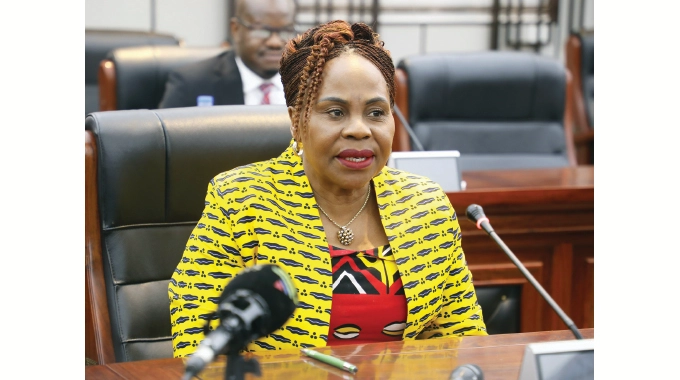
This was said by Information, Publicity and Broadcasting Services Minister, Monica Mutsvangwa last night after the Cabinet meeting.
Both Bills were presented to Cabinet by Minister Mutsvangwa.
“Cabinet received and approved the principles to amend the Zimbabwe Media Commission Act (Chapter 10:35), as presented by the Minister of Information, Publicity and Broadcasting Services, Honourable Monica Mutsvangwa.
“Cabinet wishes to inform the public that the Zimbabwe Media Commission Act is being amended to incorporate proposals by stakeholders following extensive consultations that were carried out,” said Minister Mutsvangwa.
“The amendments will seek, among other provisions, to provide for: (a) additional functions of the Zimbabwe Media Commission, which will include accrediting of local and foreign media practitioners; registration of Mass Media Services, and the regulation and quality assurance of journalism and mass media communication training, (b) delegation of disciplinary powers to professional bodies registered with the Commission, and (c) payment of annual levies into the Media Fund by registered media services.”
She said the proposed principles for the Media Practitioners Bill will provide parameters for self-regulation, a significant departure from the current statutory regulation.
“Cabinet wishes to inform the public that the Media Practitioners Bill will provide parameters for media co-regulation and bring professionalism to the media sector through the implementation of Codes of Ethics.
“The Bill will seek, among other provisions, to provide for: (a) establishment of professional bodies for purposes of disciplining members through delegated powers of the Zimbabwe Media Commission, (b) the duties of the professional bodies; and (c) the drafting of a Code of Ethics by each professional body,” she said.
The two Bills are part of a trajectory being taken by the Government to reform the media space whose legal framework has in the past suffered criticism for being closed and restrictive.
The advent of the Second Republic led by President Mnangagwa saw the repeal of the Access to Information and Protection of Privacy Act which has received condemnation from media practitioners and other stakeholders.
The law was immediately replaced by two legislative Acts – the Freedom of Information Act promulgated in July 2020 and the Zimbabwe Media Commission Act that came into effect in April 2021.
The reforms are part of the Government’s resolve to ensure that the country has a professional, viable legal framework that is consistent with the Constitution and user friendly.
The parent Ministry has in the past years been engaging media stakeholders to get their views on the media legal framework with a view to get the best practices for the sector.
It has engaged legislators, academics, media advocacy groups, civic society, development partners among others with a view to produce a shared legal framework. – The Herald