



Two new Bills, the Electoral Amendment Bill and the Prisons and Correctional Services Bill have been tabled before Parliament for debate while 10 Bills that had lapsed ahead of the end of the fourth session of the Ninth Parliament have been restored for continuation during the current and final session.
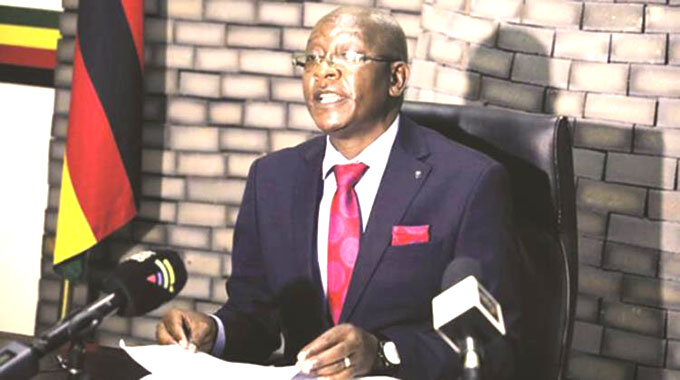
Justice, Legal and Parliamentary Affairs Minister Ziyambi Ziyambi presented the two Bills in the National Assembly last week before they were referred to Parliament’s Legal Committee to scrutinise them if they were consistent with the Constitution.
The Electoral Amendment Bill, seeks to relax registration requirements for voters ahead of next year’s harmonised elections and amend several provisions of the main Act to bring it to conformity with the Constitution.
Registration is now easier since potential voters just need to give their address without providing documentary back-up. Obtaining of proof of residence to register as a voter was a challenge for some tenants from landlords who either did not want to be bothered or simply did not want to admit they had a tenant. The Bill confirms that a driver’s licence cannot be used as identification, voters needing to produce the national ID card or a valid passport to prove identity.
The driver’s licence is issued by the Central Vehicle Registry while the other two documents are official documents from the Registrar General and the civil registry offices.
The Prisons and Correctional Service Bill is expected to repeal and replace the current Prisons Act, which dates from the mid-1950s, as it seeks to modernise the prisons legislation to ensure that it meets the international norms and standards regarding prisons administration, including the way prisoners should be treated.
It will provide for establishment, functions and administration of the Prisons and Correctional Service, the Prisons and Correctional Service Commission, the establishment of prisons and correctional facilities, the functions, rights, obligations and discipline of prison officers, the safe custody of all offenders under humane conditions that respect human dignity.
It will also ensure the discipline of offenders, the obligations and rights of sentenced offenders, the obligations and rights of unsentenced offenders, the establishment of a system of parole for offenders, mechanism to deal with complaints of abuse of offenders, judicial and civilian oversight of the operations of the Service, the penalties for offences.
The Bill will ensure that the prison system caters for the needs of vulnerable groups such as pregnant women, juvenile offenders as well as persons with disabilities, among others.
It will also focus on restorative justice through rehabilitation rather than incarceration of offenders. – The Herald


