


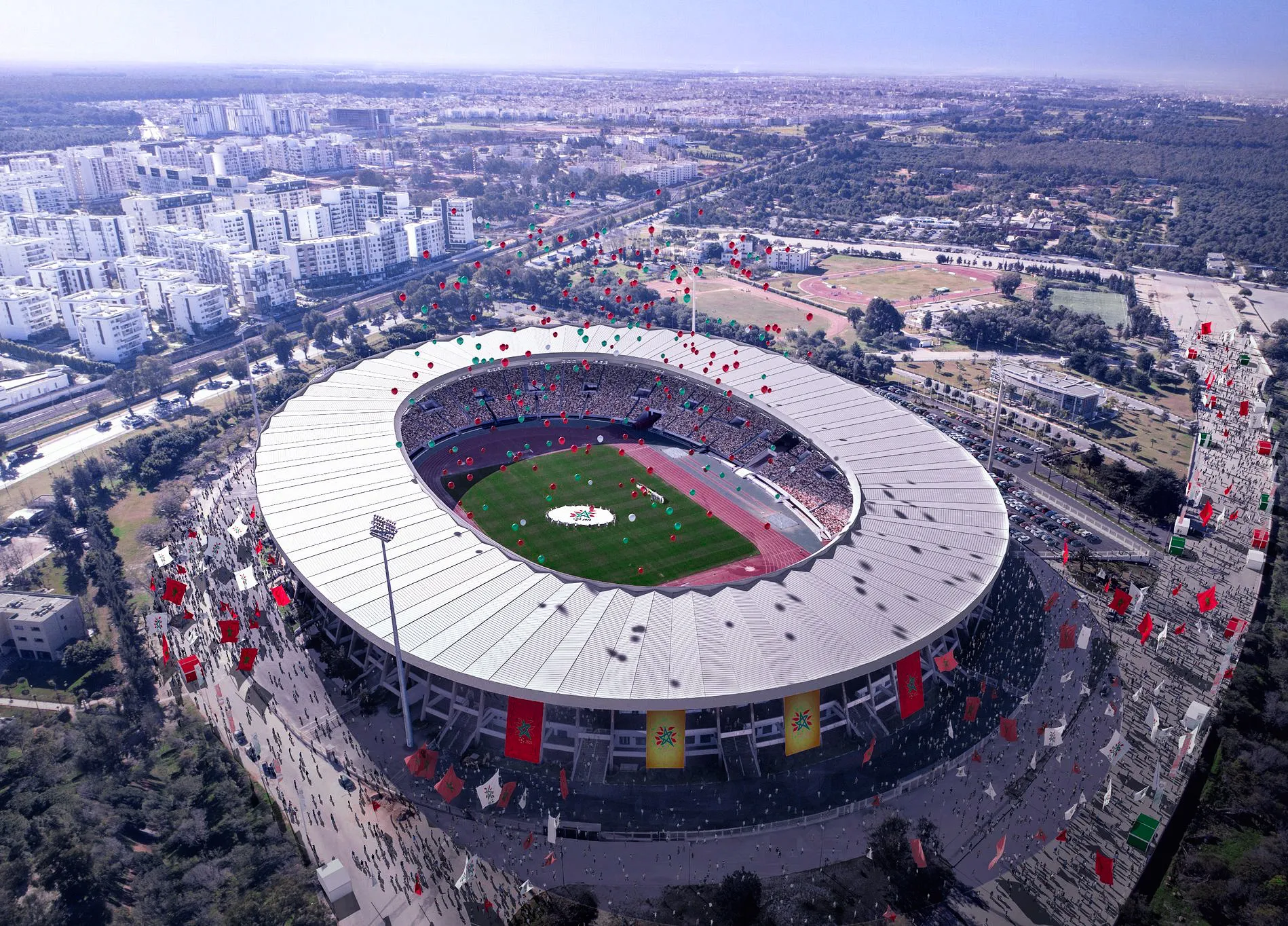
Morocco may be the current go-to host for continental football but the fact that 11 African countries voted against it’s bid to host the 2026 World Cup says a lot about its standing on the continent.
This is Moroccan history, sports tourism and politics.
It’s not often that a country that constantly puts itself forward to host tournaments gets criticised but that is exactly what has happened in football.
Morocco has come under fire for being @CAF_Online’s go-to country but the reasons are a lot more complex than one may think.
While hosting football events is a focus, the country has been growing its sports tourism sector for a long time
Other international events include the Rabat Wanda Diamond League athletics, Sport Diving World Championships, Formula E and Morocco Desert Rally Challenge.
Morocco’s history of hosting international sporting events began in the 1980’s when they hosted the Mediterranean games in 1983, the Pan-Arab games in 1986, the African football cup in 1988, the Francophone games of 1989 and the world games of Peace in 1990.
As a sporting destination, Morocco is ideally situated and offers visitors plenty of options. It shares maritime borders with Portugal and Spain, giving it easy access to Europe. There is a ski resort, a number of top level golf clubs and plenty of dessert for adventurers.
According to the World Economic Forum’s 2019 Travel and Tourism Competitiveness Report, Morocco ranks 26th globally for prioritisation of travel and tourism, 28th for safety and security, 46th for price competitiveness, and 44th for environmental sustainability.
Morocco has seen a sustained progression of tourist volume. Arrivals rose from 9.38 million in 2012 to 12.29 million in 2018 and growth continued during 2019, with government figures showing an 8.2% year-on-year increase through to July 2019.
The country has achieved this through a plan called Vision 2020 which sought to add 200,000 available beds, double international tourism arrivals, triple domestic trips and create 470,000 new jobs.
They may not have achieved this but they have gone a long way toward their goals.
Part of the reasons why Morocco has not met some of their targets can be found in the feedback the country has received when bidding to host some international events.
Morocco has attempted hosting the Fifa World Cup on no less than four occasions.
In their previous World Cup bids, it was discovered that in two of those instances, the country tried to bribe voting officials.
FIFA issued an integrity warning to the Moroccans in 2018 and in addition, their transportation plans were rated as being of high risk.
Critical when attempting to host events is support from other continental regions and Morocco has been at political odds with many African nations since 1984.
This was demonstrated in voting for the 2026 World Cup in which 11 African countries voted against Morocco’s bid.
The dispute stems from Morocco’s annexation of Western Sahara also known as Sahrawi Arab Democratic Republic in 1975. Namibia went as far as saying it will “never align itself with a coloniser” in a strongly worded statement.
Morocco withdrew from the Organisation for African Unity in 1984 following the organization’s acceptance of the Sahrawi Arab Democratic Republic as a member state.
In January 2017, Morocco rejoined the Union but it’s re-admission was voted against by 15 of the 54 member states.
Five years on, political tensions still simmer and while sport is no place for political point scoring, it remains a convenient tool that world leaders readily use whenever the chance presents itself.
And with Morocco, that happens every time major sporting events arise.
Be that as it may, the country has certainly established itself and demonstrated an ability to host large events. It’s the mega events will continue to elude them unless they can address some key political challenges.


