


SHARM EL-SHEIKH, Egypt – It was billed as the implementation COP, following the financial pledges made at COP26 in Glasgow last year.
Many African countries thought by hosting the Conference of Parties meeting on their soil – for the fifth time since the first COP meeting was held in Berlin, Germany, in 1995 – they would clinch a good deal that would help them mount a strong fight against climate change.
But a combination of disunity among African countries and the divide a rule approach by developed countries, saw them sit through long meetings that did not yield anything tangible for the continent and the entire developing world.
On Thursday, negotiations ended just before midnight and yesterday, negotiators would shuttle from one venue to other but nothing much was coming out, apart from the vague commitment by the European Union on Loss and Damage funds.
The EU promised to support extremely vulnerable countries, but debate then shifted to the definition of “extremely vulnerable”, as countries argued that it was not the number of casualties that should inform who benefits or fails to benefit.
There were expectations late yesterday that negotiations would continue today and potentially tomorrow, despite COP27 officially ending on Friday, just to try and find middle ground.
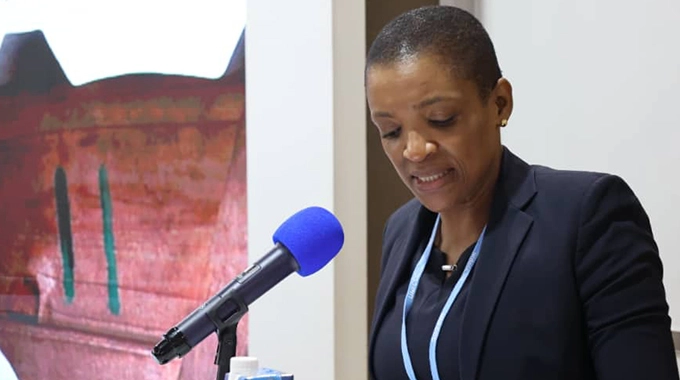
In an interview yesterday, Environment, Climate, Tourism and Hospitality Industry Deputy Minister, Barbara Rwodzi, who was participating in the negotiations with other Zimbabwean representatives, said she was not happy with how the talks had unfolded.
“As developing countries, we are saying let’s go back to G77+China; that is where it was agreed that developed countries will fund Loss and Damage, and adaptation and mitigation,” said Deputy Minister Rwodzi.
“We can’t start from Paris, to Glasgow and then Sharm el-Sheikh; it has to start from G77 (Group of 77 countries)+China, that is where the conversation started; that is where the commitment was made to fund particularly loss and damage, which is what we are desperately in need of as developing countries.
“So, the EU offered yesterday (Thursday) to say on loss and damage, they could fund but it does not have a clear text so far to say how much is being funded by the EU, and also, who is the most vulnerable?”
The EU decision to agree to fund loss and damages, which was taken after intense pressure from their citizens, does not say who exactly will benefit.
There is an unwavering belief that climate change “knows no boundaries”, and that many developing countries, and some developed ones too, have been smacked by floods and/ or drought, among other climate change vagaries, of the same magnitude.
“So, we want it to be clear because they were very articulate to say the most vulnerable. Other developed countries are not coming out clear on the funding.
“In Glasgow, they made promises and Sharm el-Sheikh was supposed to be the place for implementation. COP27 was (supposed to be) about implementation of funding,” said Deputy Minister Rwodzi.
She said three options were given, and two of them speak to implementing some of the agreements at COP28 scheduled for Dubai next year, the United Arab Emirates.
One of the options is to start implementation of the agreements now, a position supported by Zimbabwe and some developing countries.
Deputy Minister Rwodzi said it was unfortunate that Africa was always divided by the developed world, but she was happy that a few African countries continued to sit through the arduous negotiations.
Some African countries were promised funds by the developed world to implement renewable energy projects while others were not.
“As we are speaking now, we don’t know when the final decision will be made. But we are here, we won’t go. Others have already gone without anything, others with something; I don’t know (what it is).
“But we have a few countries still holding on and wanting to be together until it goes to an end. We can’t be coming to Sharm el-Sheikh where it was agreed on implementation, and go empty handed. That we are not prepared to,” said Deputy Minister Rwodzi.
In terms of coal, she said, developed countries had made it a condition for the release of funding for climate change adaptation and mitigation.
Developing countries have to demonstrate they are on the road to phasing down, if not eliminating use of fossil fuels especially coal, for them to be listed as vulnerable and therefore deserving of financial support.
Deputy Minister Rwodzi said it was impossible to sign up to phasing down coal use “when you don’t have an alternative”.
“Alternatives come from the funding. So, we want to embrace renewable energies but it is the funding aspect that is missing.
“So, if you are indicating to me that you are not going to fund me, how do I sign up, what do I do for my people. We are very willing as Zimbabwe to phase out coal but we are going to phase it out when we have an alternative,” she said.
Director for Climate Change Management Department and United Nations Framework Climate Change Conference (UNFCCC) focal point for Zimbabwe Mr Washington Zhakata, yesterday described COP27 as “one of the weakest COPs” he has ever attended.
“There is no decision which is firm, which is coming from this COP because the developed countries are very strong on their position that they would not want to release any form of resources that are meaningful.
“They are trying to play a divide and rule game with us as developing countries. Right now, when we are coming to a conclusion, that is when the European Union announces a fund for loss and damage for countries that are particularly or extremely vulnerable to climate change.”
Mr Zhakata said all countries were vulnerable to climate change, hence the need for the EU to revise its criteria for selecting beneficiaries.
All financial pledges towards the Adaptation Fund made at COP26, he said, were not fulfilled this year.
“However, here the developed countries are pledging US$200 million again. What is the guarantee that these funds would be deposited into the various international financial mechanisms?
“The issue of US$200 million for adaptation is just a mockery because if you look at the number of developing countries that are vulnerable to climate change, these funds will not cover anything; these are not meaningful,” he said.
On climate change mitigation, a number of developed countries have not yet revised their Nationally Determined Contributions (NDCs), and no one wanted to talk about them.
They only promised to meet their NDC requirements at some stage, despite developing countries being stampeded to do so.
“Like what they did under the Kyoto Protocol, most developed countries did not meet their obligations. What is the guarantee now that they will meet their NDCs? We were pushed, given some resources to come up with some ambitious targets in terms of emissions and in the year 2021, we had all done it as African countries but right now, we come here and we find European countries have not done it.
“It means our temperatures are going to continue rising and nothing much will come out of this COP,” said Mr Zhakata.
Through its revised NDCs, Zimbabwe has pledged to reduce greenhouse gas emissions by 40 percent per capita across the economy by the year 2030.


