


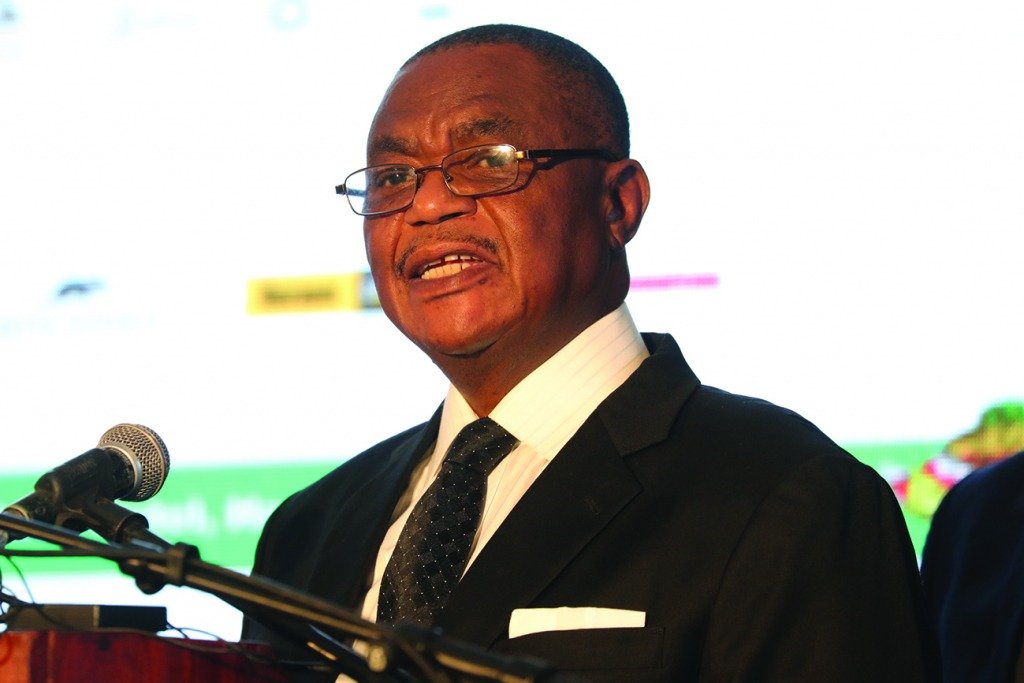
Zimbabwe is accelerating its national response and investment into combating non-communicable diseases, having registered considerable progress on communicable diseases, Acting President and Minister of Health and Child Care Constantino Chiwenga said yesterday.
He was officially opening the eye camp at Parirenyatwa Group of Hospitals in Harare where free corrective eye procedures are being provided at one of the best eye specialist centres in the region.
On normal days outside the camp, patients aged between five and 65 years will pay a nominal fee at the hospital, far below what is charged at private facilities.
The launch of the camp is in sync with President Mnangagwa’s thrust to offer a healthcare system that answers to all the needs of the populace.
Acting President Chiwenga said the coming on board of the eye camp was part of the Government’s efforts to complete the overall healthcare system, particularly as Zimbabwe has made strides in public health as exemplified by its response to Covid-19 which got global applause.
On the same day, the Acting President officially launched the country’s blueprint, the National Eye Health Strategy for Zimbabwe 2021-2025, which will be the guiding principle towards integrated people-centred eye care.
The launch follows the resolution of the World Health Assembly in August 2020. The strategy is anchored on the need for the provision of access to quality and integrated patient-centred services for all, including the vulnerable.
“The health sector in Zimbabwe is on a clear path to ensure universal health coverage and access and achieve the national vision of an upper-middle income economy by the year 2030,” said Acting President Chiwenga.
“In Zimbabwe, communicable diseases have historically contributed the most to the burden of disease, but non-communicable diseases have been on the rise in recent years.
“The previous National Health Strategy (2016-2020) had a major emphasis on public health, particularly communicable diseases, which led to remarkable results.
“The National Eye Health Strategy has been developed at an opportune time, when the Ministry of Health and Child Care has undergone a restructuring exercise to enhance efficiency in the health sector.”
“In Zimbabwe, the causes of blindness according to the Zimbabwe National Eye Health Strategy (2014 to 2018) are congenital cataracts, glaucoma, eye trauma, measles and retinoblastoma.”
The National Eye Health Strategy, says Acting President Chiwenga, comes to address the burden of eye conditions.
The strategy’s main objective is to direct the Government in eliminating preventable blindness by providing all citizens with sustainable eye care delivery services that are promotional, preventive, curative, and rehabilitative.
Acting President said to achieve this, the Government, its development partners and the people, must understand that preventing and controlling blindness are not optional actions, but essential in ensuring everyone has access to good health and wellbeing for the sake of the common good and national development.
He thanked the corporate world for supporting the eye camp, and took time to commend the hard work being put in by health workers and promised that Government was seized with improving their welfare, both in terms of remuneration and working conditions.
World Health Organization (WHO) country representative Dr Alex Gasasira, who attended the launch, said Zimbabwe continued to implement WHO member States’ commitments into concrete action.
“The National Eye Health Strategy for Zimbabwe 2021-2025 that is being launched today, addresses recommendations made to member states on integrated people-centred eye care by a resolution of the World Health Assembly in August 2020,” said Dr Gasasira.
“It is most commendable that Zimbabwe has translated commitments made at global level into concrete action at country level within a relatively short time. I would like to congratulate the Ministry of Health and Child Care for this laudable achievement.
“I believe I express the commitment of all health partners and not just the WHO, when I reaffirm our fullest support to working with MOHCC (Ministry of health and child Care) and all stakeholders in the implementation of this strategy.” – The Herald


