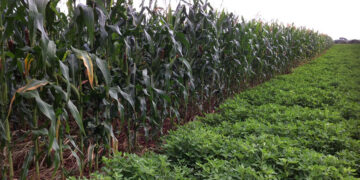




ZIMBABWE’s agricultural sector is on a recovery trajectory as evidenced by increased production in tobacco, wheat, maize and horticultural crops as Government works to enhance food security and nutrition.
Government launched the Agriculture and Food Systems Transformation Strategy whose aim is to ensure the country produces enough maize, wheat and soya beans to meet domestic demand and even produce surplus for export.
The Second Republic’s thrust is to dratically reduce the import bill while increasing exports to earn the much need foreign currency as it accelerates the attainment of an upper middle income economy by 2030.
The country expects to harvest between 380 000 tonnes and 400 000 tonnes of winter wheat against a national annual demand of around 360 000 tonnes meaning the country has a surplus.
Tobacco output marginally grew 1percent, to 213 million kgs whilst incomes to the farmers grew by 10 percent to US$650 million. Total export earnings from tobacco are projected to be US$1billion this year.
Maize production for 2021/2022 season stood at 1, 5 million tonnes while Soyabean output grew by 15 percent to 82 028 tonnes in 2021/22.
The horticulture sector is on a rebound targeting export crops such as pecan nuts whose production increased significantly by 348 percent from 85,3 tonnes last season to 374 tonnes in the 2021/22 while production of Blueberries increased sharply to 5000 tonnes in the 2021/2022 season.
Sugarcane production is estimated at six million tonnes which represents a three percent increase from 5,8 million tonnes in the 2020/2021 season.
Addressing senior members of staff in the ministry who are attending a week-long strategic planning workshop in Gweru yesterday, the Ministry of Agriculture, Fisheries, Water and Rural Development permanent secretary, Dr John Basera said the agriculture sector was on a rebound as evidenced by the increase in the production of different crops.
“The country’s agricultural sector is recovering as evidence by increases in tobacco, wheat, maize and horticulture crops production,” he said.
Dr Basera said the total earnings from tobacco exports to farmers is projected to reach US$1 billion.
Tobacco, Dr Basera said tobacco is exported throughout the year although the bulk of the crop is bought from farmers over a few weeks.
The country is the sixth-largest producer of tobacco in the world accounting for seven percent of the world supply and is also the fifth-largest tobacco exporter in the world.
Dr Basera said maize production for 2021/2022 season stood at 1,5 million tonnes whiletraditional grains production was at 194 100 tonnes.
He said as a result of the country’s concerted efforts to increase winter wheat production this year, the country is expecting to harvest between 380 000 tonnes and 400 000 tonnes against a national annual demand of around 360 000 tonnes.
“The mantra- wheat and flour self-sufficiency at all cost- proved achievable. True to the bounce back better plan, creed and spirit, I would like to congratulate everyone in the agriculture space for this unprecedented achievement, a record 13 months of wheat supply from local production,” said Dr Basera.
He said the horticulture sector is also on a rebound targeting export crops such as blueberries whose production increased sharply to 5000 tonnes in the 2021/2022 season.
“Pecan nuts production increased significantly by 348 percent from 85,3 tonnes last season to 374 tonnes in the 2021/22 season. Sugarcane production is estimated at 6 million tonnes which represents a three percent increase from 5, 8 million tonnes obtained in the 2020/ 2021 season,” he said.
Dr Basera said there was also a surge in coffee, apple and Irish potato production.
“In 2021 exports from the horticulture crops grew to US$64, 6 million, reflecting a 6,8 increase compared to US$59, 5 million recorded in 2020,” he said.
In the livestock sector, Dr Basera said the country witnessed a reduction in mortality rates from 11, 1 percent to 8,8 percent.
He said tick-borne related deaths also dropped by 50 percent.
Dr Basera said the national beef herd increased by one percent from 5, 4 million cattle in 2020 to 5, 5 million last year.
“Intensive dipping as well as the tick grease programme under the Presidential Livestock Scheme drastically reduced livestock deaths,” said Dr Basera.
He said the Ministry is seized with initiatives to mechanise agriculture to upscale production efficiencies and build competitiveness
Dr Basera said as such a number of initiatives have been launched including, the John Deer, Belarus 1 and 2 and Smallholder Mechanisation Programme.
“We have done so well by any measure but of course, we can still do more. I take pride in all of you who are remaking our agriculture great and a force to reckon with. Surely, the benefits to the overall economy are immense. What we have achieved gives me much hope of what we can still and must achieve as we journey towards 2030, agriculturally,” said Dr Basera.
He said price increases of inputs and components, imported inflation, limited availability and global supply disruptions are now a reality that the country has to live with. He said the Russia –Ukraine war, Covid-19 pandemic and climate change are affecting the fertilizer, fuel and foodsupplies.
“As Zimbabweans, we are sure-footed to rise and soar above these global challenges. The agriculture sector is on a rebound as evidenced by the surge in crops such as tobacco, wheat, and other horticulture crops and that growth trend should continue as we go into the 2022/2023 season,” he said.
Addressing the same workshop, the Minister of Agriculture, Fisheries, Water and Rural Development Dr Anxious Masuka said agricultural development will result in accelerated rural industrialisation.
In turn, he said rural industrialisation will spur rural development adding that rural development will facilitate and accelerate the attainment of Vision 2030.
“In 2023, we must transform the three million rural households, some 9,2 million Zimbabweans, from subsistence to surplus oriented farming. We must equally transform the 360 000 A1 and old resettlement farmers from surplus-oriented to commercial farmers and we must transform the 23 000 A2 farmers to perennially successful businesswomen and businessmen,” said Dr Masuka.
He said the drive to fulfil the objectives of the National Development Strategy 1 has resulted in the Government putting in place anchor plans which include the agriculture recovery plan, livestock recovery and growth plan, horticulture recovery and growth plan, accelerated irrigation rehabilitation and development plan, and tobacco transformation plan. – The Chronicle


