


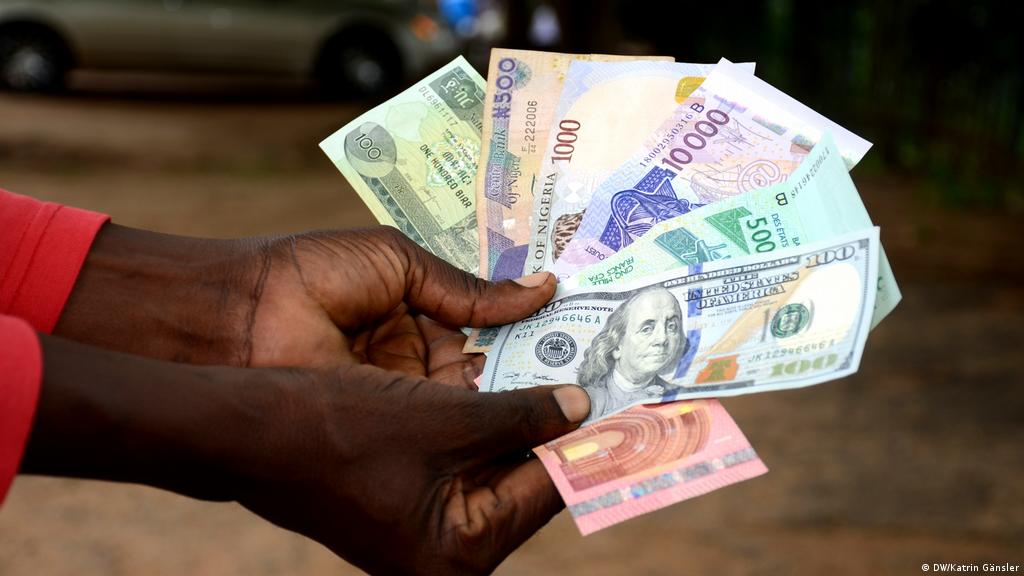
African currencies are plummeting, with increased import prices exacerbating economic and inflationary pressures. Various causes have played a role in brewing the currency crisis in Africa.
A currency crisis occurs when the value of a country’s currency falls drastically. This loss in value, in turn, negatively impacts an economy by causing instability in exchange rates. This means that one currency unit no longer buys the same amount as another.
This disaster can be both foreseen and unexpected. It might be caused by governments, investors, central banks, or any combination of these parties. However, the end outcome is always the same: A gloomy outlook that causes widespread damage to the economy and capital loss.
A currency crisis is defined as a quick and abrupt depreciation of a country’s currency. Currency depreciation goes in tandem with turbulent markets and a loss of confidence in the country’s economy. Historically, crises have arisen when market expectations induce significant movements in the value of currencies.
The global economy is now in turmoil. As the world economy enters another era of a currency crisis, the value of the US dollar keeps rising. Over half of all international trade is billed in dollars. A stronger dollar thus hurts consumers globally, particularly in Africa, who rely on dollars to pay for imports.
The US Federal Reserve’s hawkish approach to increasing interest rates more aggressively than central banks in other major countries has contributed to the dollar’s appreciation. The fact that investors generally see the dollar as a “safe haven” asset during times of economic turmoil has added to its resilience.
The British pound, Japanese yen, and euro have all reached fresh lows versus the US dollar. The euro’s decline directly impacts the 14 African nations that use the CFA franc, linked to the European single currency. African currencies are plummeting, with increased import prices exacerbating economic and inflationary pressures. Various causes have played a role in brewing the currency crisis in Africa.
Africa’s import dependence and vulnerability to global economic shocks
Most African nations lack a robust commodities export base making them vulnerable to economic shocks. African countries have stark reliance on commodity imports. As such, African economies are subject to global shocks such as the COVID-19 pandemic and the repercussions of Russia’s invasion of Ukraine.
African nations are facing significant monetary policy issues. The pandemic slowed economic growth, and the recovery will expectedly leave production below the pre-crisis level. Several African countries have also seen inflation rise. The rising inflation poses a problem exacerbated in certain instances by fiscal dominance resulting from significant levels of public debt.
Many of these countries have also seen capital outflows as the major central banks in developed economies abandon policy stimulus and, inadvertently, hike interest rates. The economic effect of Ukraine’s war, notably the accompanying rapid spike in oil and food costs, is expected to exacerbate the issues.
To weather economic shocks, African nations must innovate in their exports. A burgeoning middle class, an increasing consumer market, better access to financial technology and services, and a vibrant private sector may all help diversify African economies.
By removing trade barriers in services, increasing appropriate skills, and enhancing access to creative alternative finance, the region’s manufacturing productivity may be increased, propelling Africa’s economic development and structural change.
Rethinking export diversification allows Africa to lessen its reliance on imports, which helps minimise exchange volatility and, as a result, solves currency crises. African nations must implement policies to increase productive capacity and industrialisation, stimulate investment, and strengthen regional integration and infrastructure.
The extent of the African currency crisis
Ghanaian Cedi
The Ghanaian cedi has shed 40 percent of its value versus the dollar in 2022. The decline makes the Ghanaian cedi the most vulnerable currency on the continent. Ghana’s issue demonstrates how the nation’s fiscal crisis has eroded investor confidence, prompting Accra to seek an IMF bailout. In August, Fitch lowered Ghana’s credit rating to CCC, indicating that “default is a valid concern.”
South African Rand
The South African rand is the other primary currency under pressure as market confidence dwindles. The rand has remained in a free-fall against the US dollar for years, falling by 9 percent in 2022.
The South African Reserve Bank (SARB) has upped interest rates fourfold this year. According to Irmgard Erasmus, a senior financial economist at Oxford Economics Africa, SARB remains under pressure from financial markets to continue its hawkish stance. She cautions that lower-than-expected interest rate hikes would result in retribution for the rand.
Kenyan Shilling
Kenya is among several African nations especially susceptible to the currency crisis due to its reliance on imported fuel. Kenya has faced a double whammy due to exchange rate volatility. The cost of petroleum has risen due to soaring wholesale prices and the depreciation of the Kenyan shilling.
This year, the Kenyan shilling’s indicative value has fallen by 6 percent. Kenya’s horticulture industry, which the nation depends on for foreign exchange, has remained in the depression amid a sluggish post-Covid economic recovery and a prolonged drought.
Nigerian Naira
Nigeria’s naira is one currency that should defy the currency crisis trend. Economic theory suggests that 2022 would have proved a boom year for Africa’s most populated nation, as it is a significant exporter and producer of oil. However, in truth, the reverse is the case. Declining oil and gas production and the massive expense of subsidised imports of refined petroleum products have exacerbated a growing economic and currency crisis.
Nigeria’s complex exchange rate system makes it hard for individuals and businesses to access dollars, especially during economic hardship. The system enables powerful individuals to obtain currency from the Nigerian Central Bank and trade it at “exorbitant prices” on the black market.
Lessons of the Zambian Kwacha
The Zambian kwacha is the world’s highest ranking currency versus the US dollar. The kwacha gained more than 18.5 percent from January to early September 2022. This has been accomplished via a variety of fiscal and monetary policies. The major takeaway from Zambia is that Hakainde Hichilema’s administration effectively created policy credibility in its first year in office. – The Exchange
A deal with the IMF to renegotiate Zambia’s debt via a US$1,4 billion rescue package has resulted in the Kwacha appreciation against the US dollar. The move has limited the pace at which prices were soaring owing to supply-chain interruptions caused by the Ukraine conflict and the ravages of the covid-19 outbreak.
Furthermore, economist Patrick Chileshe claims that greater forex liquidity is another reason the Kwacha has strengthened over the US dollar. In June, the central bank offloaded an average of US$13 million daily to hedge against currency volatility.
The Bank of Zambia’s foreign currency supply to the market has been stable, whilst demand for US dollars has been low, causing the Zambian Kwacha to appreciate.
Inflationary pressures have also helped the Kwacha. While South Africa, Nigeria, Ghana, and Kenya have all struggled to keep increasing inflation and falling currencies under control, Hichilema’s administration has managed to cut the inflation rate from 24,4 percent in August 2021 to 9,7 percent in June this year.
All African nations confront a challenging external environment. China’s economic growth has slowed, with other developed countries experiencing even slower growth. Consequently, demand for African exports will remain quiet for the foreseeable future. There is no simple way out of the currency crisis cycle for African authorities looking to control currency risks. – The Exchange


